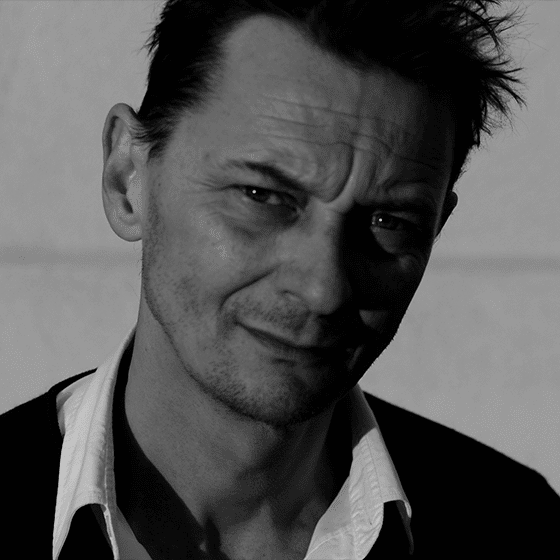
Fred Nicolas
Between 1995 and 2010, Fred Nicolas worked as an assistant to numerous filmmakers, including Robert Guédiguian, Erick Zonca, Arnaud Despleschin, Pierre Salvadori, Manuel Pradal, Brigitte Roüan, Agnès Merlet, and Marina De Van.
Between 1995 and 2010, Fred Nicolas worked as an assistant to numerous filmmakers, including Robert Guédiguian, Erick Zonca, Arnaud Despleschin, Pierre Salvadori, Manuel Pradal, Brigitte Roüan, Agnès Merlet, and Marina De Van.
He has directed several short films and documentaries, including Rouge Bandit (56′ – 2009 – Sycomore Films), dedicated to Charlie Bauer. Max & Lenny, his first feature film, starring Camélia Pand’or and Jisca Kalvanda, was released in cinemas in 2015 (Chaz Productions). The screenplay, co-written with François Bégaudeau, received funding from the CNC and the Gan Foundation for Cinema Award in 2012. In October 2014, Jisca Kalvanda won the Best Actress Award at the Saint-Jean-De-Luz International Film Festival for her role as Max.
In January 2015, Fred Nicolas wrote his second feature film, Bandit Rouge, once again with François Bégaudeau and accompanied by Groupe Ouest in the LA SÉLECTION in 2016, an event co-created by Groupe Ouest and the Gan Foundation for Cinema.

Bandit Rouge
Sélection Annuelle 2015, La Sélection 2016
Marseille 1960.
Twenty-year-old Charlie is at odds with his father Charles, a decorated former resistance fighter from the Second World War and a communist like everyone else in his neighbourhood in the north of Marseille, L’Estaque. Revolted by the Algerian War, which he doesn’t support, and to his father’s despair, Charlie deserts the French army. Now an outlaw, estranged from his family and society, Charlie moves from anger to political action, then from armed action to banditry, in the particularly brutal period of the Algerian War. With a few friends he meets in the Communist Youth Movement, Charlie steals food, loots freight trains and breaks into luxury shops in Aix-en-Provence, redistributing the goods to the most needy in his neighbourhood and to the FLN to support the Algerian cause. There are numerous clashes with the police, and deaths on both sides. Their rampage ends with a military arrest while Charlie and his gang are celebrating Algerian independence. In November 1963, Charlie is sentenced to 25 years in prison. He will never see his father again.